Certification discipline
Water Distribution Operator Certification
Distribution operators keep treated water safe and pressurized from the plant to the tap. The exam emphasizes hydraulics, cross-connection control, storage, and maintaining water quality in the distribution system.
Choose your grade
Free practice questions →Certification is typically organized into grades or classes of increasing responsibility and system complexity. The names and exact requirements for each level vary by state — some states use numbers, others use letters (Class A–D) or other designations. Pick a grade below for exam details, or find your state’s terminology on its certification page.
Grade 1
Entry
Entry-level certification for operators at small systems or working under direct supervision.
Grade 2
Intermediate
Intermediate certification for operators running day-to-day operations at small to mid-size systems.
Grade 3
Advanced
Advanced certification for shift leads and operators at larger systems with complex processes.
Grade 4
Expert
Highest certification for chief operators and superintendents at the largest, most complex systems.
What the exam covers
- Distribution system hydraulics
- Storage facilities and tanks
- Pumps and motors
- Cross-connection control and backflow
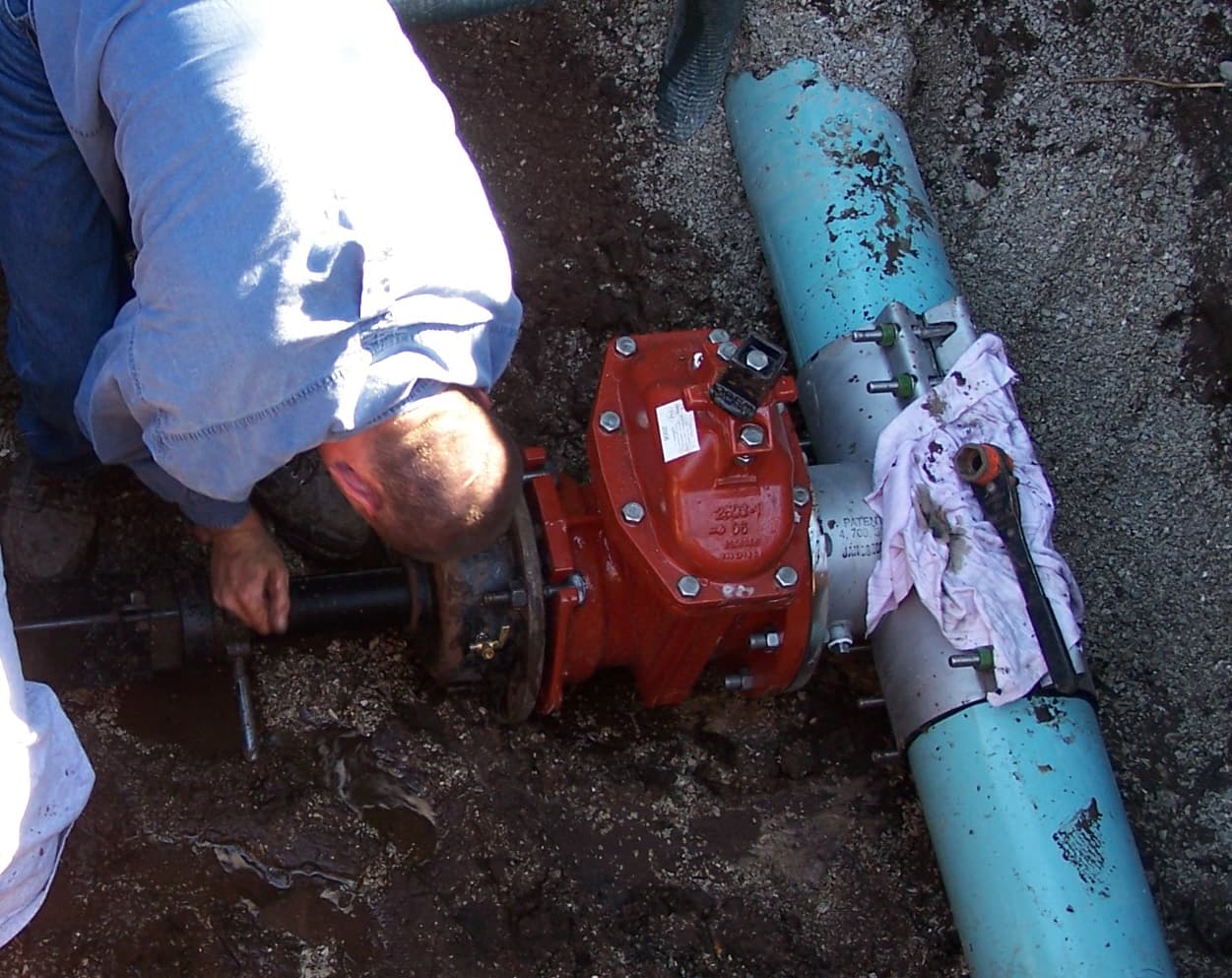
- Water main installation and repair
- Disinfection of mains and storage
- Water quality in the distribution system
- Regulations (Lead & Copper Rule, RTCR)
The math on the Water Distribution exam
These calculations are commonly included in water distribution operator exam preparation and may appear on your exam depending on your certification level and state. Practicing them is one of the most effective ways to prepare.
- Pressure and head (psi to feet)
- Pipe volume and flushing
- Chlorine dosage for main disinfection
- Flow rate and velocity
- Storage detention time
- Pump horsepower and efficiency
Frequently asked questions
- What is on the water distribution operator exam?
- Water Distribution exams commonly cover distribution system hydraulics, storage facilities and tanks, pumps and motors, cross-connection control and backflow, and related topics, along with applied math such as pressure and head (psi to feet), pipe volume and flushing, chlorine dosage for main disinfection. Exact content, question count, and passing score are set by your state's certifying agency and exam vendor.
- Is operator certification the same in every state?
- No. Every state has its own certifying agency, exam vendor, grade or class names, and renewal rules, though most programs follow a similar four-level progression in substance. See your state's page for the specifics that apply to you.
- What math should I study for the water distribution exam?
- The math that comes up most for water distribution operators includes pressure and head (psi to feet), pipe volume and flushing, chlorine dosage for main disinfection, flow rate and velocity. Practicing these calculations is one of the most effective ways to prepare.
- What's the difference between water distribution and water treatment certification?
- Water Distribution certification covers operators who maintain the pipes, pumps, and storage that deliver drinking water. Water Treatment certification covers operators who treat drinking water at surface or groundwater plants. Some states require or offer both; check your state's requirements.
- Are these official certification exam questions?
- No. This is an independent study resource, not affiliated with any state agency or exam vendor. Practice questions and study content here are meant to supplement, not replace, your official exam preparation materials.
Content on this page is written and reviewed by our team; see our methodology for how it’s sourced, and your state’s certification page for state-specific requirements.