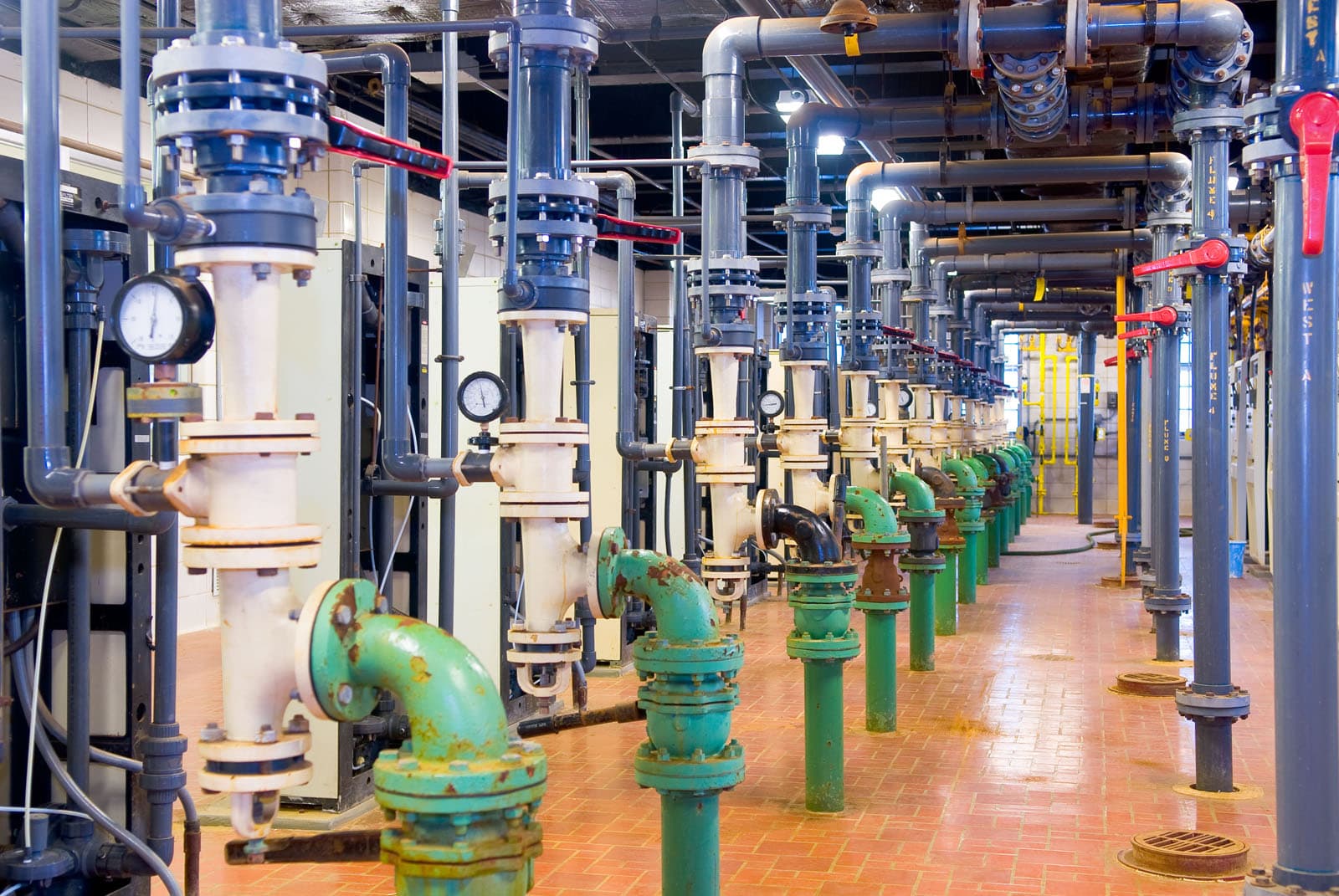
Water treatment focuses on finished drinking water
Water treatment operators monitor source water, chemical feed, coagulation, filtration, disinfection, finished-water quality, and plant alarms.
The work is tied closely to public-health compliance: turbidity, disinfectant residual, pH, corrosion control, sampling, and treatment records.
Wastewater treatment focuses on process biology and discharge limits
Wastewater operators monitor influent flow, primary treatment, aeration, clarifiers, sludge wasting, disinfection, dechlorination, solids handling, and permit sampling.
The work often includes more biological process control. Terms like BOD, MLSS, RAS, WAS, sludge age, SVI, and dissolved oxygen become part of daily troubleshooting.
Distribution and collection are separate but connected paths
Drinking-water distribution jobs focus on mains, valves, hydrants, pressure, meters, flushing, storage tanks, and backflow prevention.
Wastewater collection jobs focus on sewers, manholes, lift stations, force mains, cleaning, CCTV inspection, inflow, infiltration, and overflow prevention.
Which path should a beginner choose?
Choose water treatment if you like chemistry, filtration, disinfection, finished-water compliance, and plant monitoring.
Choose wastewater if you like biological troubleshooting, mechanical equipment, solids handling, and environmental compliance. Choose distribution or collection if you prefer field work, repair, inspection, and route-based operations.